00:00:00 – 00:06:02 – Pete Aston
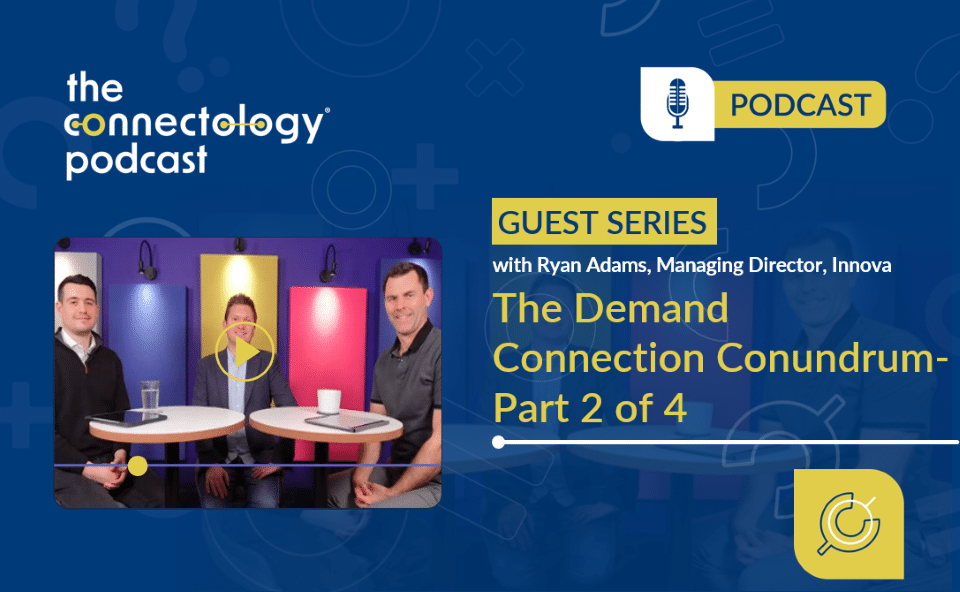
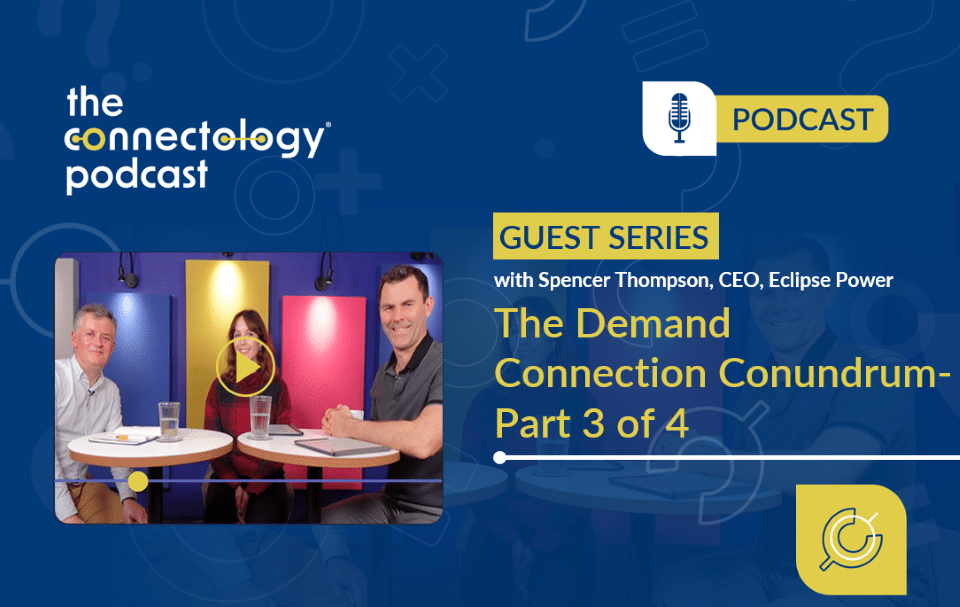
Hello and welcome to another podcast from Roadnight Taylor, I'm Pete Aston and I'm just here to give you a five-minute summary of three podcasts that we've done recently with Ryan Adams of Innova, Spencer Thompson of Eclipse, and David Wildash of Apatura. And we were discussing the issues around the connection of large-scale demand projects into the transmission network and the ownership of transmission network assets.
It was really great to talk to all three of them, and I want you to stop listening to me very shortly and go and listen to them and those three podcasts, which were, which were great, but firstly I just want to give you a quick summary of the key themes and issues that came out, across those three discussions.
So, in terms of issues, the first issue was that demand projects can't own transmission network assets, that's been known for a long time, but it's really come up recently with these really large scale, hyperscale demand projects that are coming through the network, and it's become a real issue that demand can't own transmission assets.
The second issue, following on from that, is that the Electricity Act itself, is not clear on what a transmission network actually is. There's a definition in the, in the Electricity Act that says a transmission network needs to be comprised wholly or mainly of high voltage assets. So, you know, what does that really mean, how much is mainly, you know, is it 90%, 95%, more? It's difficult to actually understand what that means. So, there's clarity needed around the definition in the Electricity Act.
The third thing is that there's differences in how the transmission owners actually operate. So, in Scotland, Scottish Power and SSE will already build the transmission network out to a customer's site, which is helpful because it means those customers then don't have to try and build that transmission network. Whereas in England and Wales NGET, have historically not built the transmission out to customer's site. So, customers are left having to do that network build themselves – and so that can cause quite significant issues.
The fourth issue that was raised across the three podcasts was that around circuit breaker bay availability and hybrid projects. At the moment it's very unclear whether a Hybrid project of a, a large demand, say a data centre and some sort of generating technology like battery energy storage or, or solar, can actually share a connection point, because there needs to be different bilateral connection agreements for the different technology types. And so, if it's not possible to have hybrid projects in that way, then that proliferates a number of circuit breaker phases, bays that need to be made available at the, the National Grid Substation, and so clarity around circuit breaker bay availability in hybrid projects is crucial to try and make efficient use of circuit breaker bays.
The fifth thing is, the need for clarity and maybe change around the SQSS network security requirements, how many circuits does a 500-megawatt demand site actually need – is it three? Is it four? Is it two? Um, what needs to be determined around that? What non-firm options can be provided for transmission connections? So, issues around network security and SQSS really need to be, solved.
The sixth point that came out across the three podcasts was who's really taking a lead in the industry on this issue? DESNZ, Ofgem and NESO are all involved in different discussions in different ways but is there a risk that this issue about transmission network ownership for demand projects fall into a black hole in the middle? So, one party probably the government, probably DESNZ, needs to take leadership on this issue and really drive it forward.
And the seventh issue is just around speed and pace. GB is competing with both Europe and the whole of the rest of the world in terms of data centres and potentially other technologies as well. So, delays in trying to get these policy issues ironed out, could prevent the rollout of data centres and other technologies – so speed was a real issue.
And in terms of solutions, I think three things really came up quite strong, in the podcasts.
The first one is that Ofgem could quite quickly provide some clarity around what the Electricity Act actually says what a transmission network is – that could be just done by a, a letter and potentially could be out early next year, and that would really help to clarify the situation; it could even allow demand projects to install a certain amount of transmission network assets and could really free up certain projects to move forward much more quickly.
The second thing is that NGET could agree to build, the transmission out network out to customers sites, so that potentially could happen quite quickly, although I guess there's a funding issue that would need to be considered from NGET as to how they do that.
And then the third thing that could be pushed forward to really help this is to give, demand projects a license. So, install a, provide a demand license in a similar way to there is for a generation license, but that's potentially got a longer tail to it, might take a bit longer because it needs, changing sort of the Electricity Act or, something similar.
So there's definitely momentum building on this issue. I really encourage you to watch or listen to the three podcasts with the three guests that we had, all three of them give us slightly different angle, but all cover the same sort of issues that I just mentioned.